
When Your Growth Becomes Someone Else’s Wound
The leader’s job is to make the possibility of growth visible and accessible


The after party is winding down. The room smells like coffee and warm congratulations. Someone from the organizing team has just handed you a framed award, and the people around you are smiling — genuinely, you think. You make your way through handshakes and photographs, and moments later you pull out your phone. The posts are going up. The notifications are stacking. And there, buried inside the thread, a comment from someone you’ve known for years. It carries the shape of a compliment but the temperature of something else entirely. You read it twice. You put your phone in your pocket. You smile at the next person who reaches for your hand. And somewhere on the drive home, you realize: this is a different kind of territory now.
Every serious leader arrives here. And almost none of them are prepared for what they find.
This is Resonance Envy — the envy that rises around a leader who becomes more visible, more impactful, and more widely recognized than those who once stood beside him. It surfaces through organic growth, through genuine influence, through awards and followers and invitations that came because the work earned them. And it is one of the least-discussed, most destabilizing forces in modern leadership.
Several of my clients, due to their visibility and increasingly influential profile, have experienced the impact of resonance envy, some of them relentlessly. As a result, I had to explore strategies to support them and protect their life’s work. They are the kind of emotionally intelligent leader that knows when and how to adapt, so they can continue to grow.
That’s my goal in designing a path forward: how to transform a negative event over which they have limited control into a positive contribution that enhances their legacy.
Part I: The Paradox of Earned Influence
A leader builds something real. He does the work for years — quietly, consistently, with integrity. No paid campaigns, no manufactured hype. He shows up, adds value, and over time, the world notices. Awards come. A following grows — regionally, nationally, internationally. His ideas travel further than he ever expected.
He wakes up with the same mission. He still cares about the same people and the same causes.
And yet, to some of those closest to him — collaborators, early believers, peers from the beginning — something has shifted. The scale of his impact feels, to them, like a kind of departure. His growth reads, through their lens, as distance. His resonance, earned by influence rather than advertising, becomes a mirror they didn’t ask to look into.
This is the seed of Resonance Envy.
It is envy of significance — of being seen, of mattering at a scale that others feel they cannot reach. Because it often wears the costume of loyalty (”I just don’t want him to forget where he came from”), it is especially difficult to name and navigate.
Part II: What the Research Actually Tells Us
The Psychology of Envy
Envy is one of the oldest and most thoroughly studied emotions in psychology. Aristotle defined it as pain at the good fortune of others. Modern researchers have sharpened this further: envy emerges when we perceive someone like us as exceeding us in a domain we care about, particularly when we believe the gap is unfair or undeserved.
Psychologists Richard Smith and Sung Hee Kim, in their foundational work on the psychology of envy (Psychological Bulletin, 2007), distinguish two forms:
Benign envy — a motivating force that pulls the observer upward, inspiring them to work harder and aspire to what they admire.
Malicious envy — a destructive force aimed at leveling, at pulling the successful person back down to restore a perceived sense of equality.
When a leader earns organic influence, those around him who feel “left behind” land in malicious envy. The gap feels personal. They were there. They know him. They believed they might have been the one.
This is the signature wound of proximity: the closer you were at the start, the sharper the envy can feel at the finish.
The Sociology of Envy
Helmut Schoeck’s landmark work Envy: A Theory of Social Behaviour (1969) argued that envy functions as a social regulator — a mechanism communities use to enforce conformity and punish deviation from group norms. In tight-knit communities (professional associations, niche industries, geographic regions, social movements), standing out too far, too fast gets interpreted as a betrayal of collective identity.
This is the “tall poppy” syndrome documented extensively in Australian, British, and Scandinavian cultures: the social pressure to cut down those who grow taller than the rest.
In the social media age, this dynamic has been turbocharged. Sociologist Sherry Turkle at MIT notes that social platforms function as “comparison engines” — environments where influence is quantified and made public in real time (followers, likes, shares, speaking invitations), making relative status perpetually visible and perpetually painful for those who feel they are falling behind.
Envy in the Business and Leadership Literature
In organizational research, envy is identified as one of the top hidden drivers of political behavior, sabotage, and disengagement in high-performing teams (Vecchio, 2005, Journal of Vocational Behavior). Harvard Business School research by Tomas Chamorro-Premuzic notes that organizations systematically underestimate the damage of leadership envy because it hides under the language of feedback, accountability, and concern.
The damaging phrase “he’s leaving his people behind” is a particularly well-documented form of envy re-framing. Researchers call it moral repackaging — converting a personal emotional response (I feel surpassed) into an ethical critique (he has failed us). Communities will often collectively adopt this narrative as a form of shared permission to disengage or criticize.
I was recently asked by an academic observing the meteoric rise of one of my clients if I didn’t think “he was leaving his people behind.” Aware of my client’s situation, his cultural background and the political climate in which he operates, I responded that everything my client is experiencing evolved as a result of his identity, his tenacity and the endearment he generates through his philanthropy. The deeper his influence, the more support he gets to build a path for others to follow, as his legacy is to teach others how to design their own way forward. Instead of an “either/or” proposition, he’s building a “yes... and” opportunity.
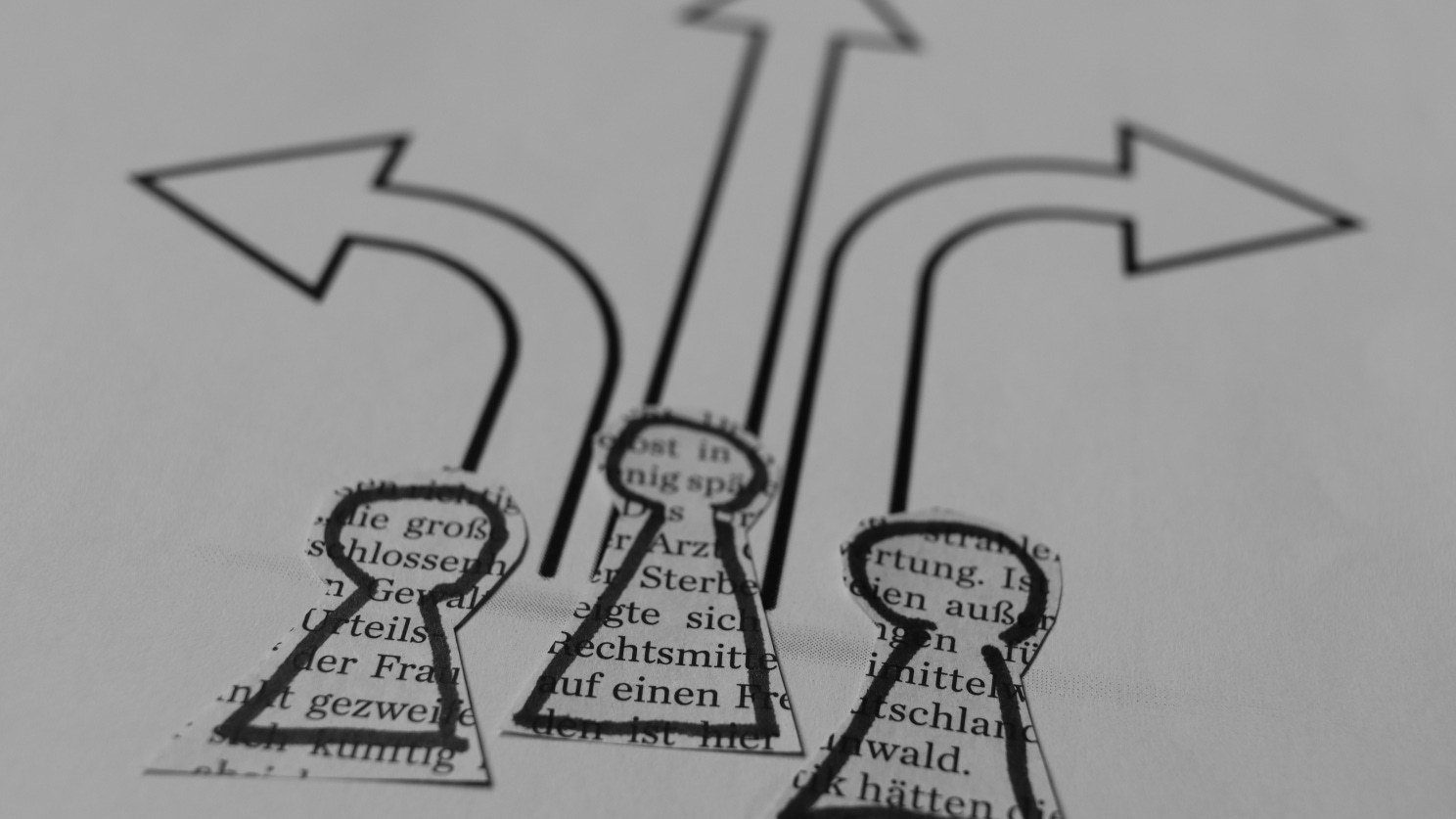
Part III: The “Leaving His People Behind” Narrative — What It Really Means
When a growing leader hears this phrase, the instinct is to defend himself — to prove his loyalty, to shrink, to slow down. The instinct leads him in the wrong direction.
This narrative carries signals beneath its surface, and a seasoned leader learns to read them:
“I am afraid you will no longer need me.” When a leader’s reach expands, early supporters fear their place in his world has lost significance. This is a grief response — and it deserves compassion, not capitulation.
“I have not grown at the same pace, and this is disorienting.” His growth has changed the reference group. Those around him face a choice: grow alongside him or accept a changed dynamic. Both options demand something.
“I wanted this too, and I don’t know how to say it.” This one cuts deepest. The critique often carries the fingerprint of an unfulfilled dream. Questioning the leader’s character is easier than interrogating one’s own stagnation.
The people who feel these things are fully human. The work for the leader is to respond with wisdom rather than defensiveness — and to transmute envy into invitation.
Part IV: Antidotes — For the Individual on Both Sides
For the Leader Who Receives the Envy
Name it without shame. Resonance Envy is a real phenomenon and naming it — to yourself and where appropriate with trusted advisors — removes its power to confuse or destabilize you. Your growth is the path. The gap in perspective is the terrain you navigate.
Keep your full height. Diminishing yourself to ease someone else’s discomfort is a disservice to the mission, the cause, and the people you were built to serve. Humility lives in how you grow — in the quality of your attention, the depth of your gratitude, the generosity of your platform. It has no address in whether you grow.
Stay close to your origin story. Regularly returning to the “why” — and telling it publicly — reminds your community that the scale has changed, and the soul has remained constant. Visibility without narrative creates a vacuum that envy fills.
Identify the signal inside the noise. Discern. Some of those challenging you carry a genuine concern worth hearing. The discipline is separating legitimate feedback from displaced emotion dressed as feedback. Extract what is real and release what is not.
Cultivate a council of honest voices. Surround yourself with people committed to your growth and your accountability. Envy thrives in the absence of genuine relationship. Leaders with a real inner circle — people whose honesty you trust completely — hold their center when external envy rises.
For the Individual Who Feels the Envy
Acknowledge the emotion honestly. Saying “I feel envious” — privately, to yourself — is the beginning of freedom. The emotion itself carries useful information. Acting on envy by undermining, criticizing, or withdrawing is where the damage begins.
Ask: What does this tell me about what I want? Envy is an extraordinary signal. It points directly at desire. The productive question is: “What does his achievement illuminate about what I am longing for — and what would it look like for me to pursue that in my own right?”
Reframe comparison as research. Psychologist Kristin Neff’s work on self-compassion offers a powerful alternative to social comparison: inspiration gathering. “What is he doing that I can study, adapt, and apply in my own context?” turns a wound into a workshop.
Reclaim your own lane. Envy contracts focus. It pulls your eyes off your own work and onto someone else’s scoreboard. Sustainable leadership is built by people who are more interested in their own trajectory than in anyone else’s relative position.
Part V: What Highly Effective Leaders Have Done
The challenge of leading through envy is ancient and well-documented. The most effective leaders — in business, social movements, and culture — have consistently done the same things.
Nelson Mandela understood that his growth in moral authority could isolate him from those who once stood with him. His antidote was radical attribution — consistently crediting the movement, the collective, and the sacrifice of others. He said, in effect: “I am only the result of you.” This framing dissolved much of the envy that might otherwise have accumulated around his singular stature.
Oprah Winfrey, as her platform grew to global scale, institutionalized a strategy of elevation by proxy — consistently using her reach to amplify others. The implicit message was: “My table is not finite. The bigger my table, the more seats there are.” She turned her growth into others’ opportunity — structurally, repeatedly, and visibly.
Lin-Manuel Miranda grew up shaped by a Puerto Rican community in New York, and when Hamilton became a global phenomenon, the pressure to be the singular face of Latino excellence arrived fast and heavy. His response was deliberate and consistent: radical attribution. He named his influences constantly — the writers, the musicians, the community organizers, the teachers — and used his platform to amplify Latino artists with the same relentlessness that others used to protect their position. Programs like Hamilton in the Schools were designed explicitly to ensure that the doors his success opened would not close behind him. He made his ascent a corridor, not a room.
Brené Brown, as she rose from academic researcher to global speaker and author, regularly acknowledged the discomfort of that transition publicly — naming the gap between her earlier community and her expanded reach. Her transparency became a bridge that others could walk across.
The through-line across all of them: highly effective leaders transmute envy by making their success legible, attributable, and participatory. They give people a story they can belong to.

Part VI: Making It a Game We Can All Play
Your growth is an invitation. Every stage you reach, every award you receive, every new follower from a country you’ve never visited — these are proofs of concept for what is possible. The leader’s job is to make that possibility visible and accessible.
The question worth living inside is: “How do I redesign the playing field so that my growth creates more room?”
This requires intentionality across five dimensions:
Narrate the journey, not just the destination. People see the award, the following, the stage — and they see a finished product. They see a decade of invisible work when you tell them about it. When leaders narrate the process openly and honestly, they give others a path to walk rather than a summit to resent.
Create explicit access ramps. The most envy-resistant leaders design their platforms as ecosystems — with genuine roles, collaborations, and pathways for others. When someone feels they have a stake in your mission, they move from observer to builder. That shift changes everything.
Make the win shareable. Every recognition you receive is an opportunity to redistribute meaning. Name the people. Tell the stories. Let the award speak to the movement. When you win in a way that others feel a part of, the envy loses its oxygen.
Invite the challengers into dialogue. Some of the people expressing envy as critique are your most passionate potential allies. They care enough to be wounded. A direct, generous, curious invitation will convert some of them from critics to collaborators. That is enough.
Model the culture you want to inhabit. Celebrate others growing in your space — freely, enthusiastically, and often. Leaders who do this consistently reshape the social norms of their entire community. The game changes when the person at the top plays it differently.
The Resonance Envy Thinking Tool
A two-sided mirror for leaders and those navigating envy
── SIDE A: For the Leader Receiving Envy ──
Use this when you feel diminished, misunderstood, or politically undermined by those closest to your work.
What is being said beneath the criticism? → Listen for fear, grief, or longing — then respond to what is real.
Am I adjusting my growth to manage someone else’s discomfort? → Recalibrate. Growth is the mission.
Have I made my journey visible enough to be followed? → Narrate more. Transparency closes the gap that projection fills.
Who in my circle is genuinely accountable to me? → Invest in those relationships. They are your ballast.
Is there a legitimate signal inside the noise? → Extract it and act on it. Release the rest.
How can I redesign this for “we” rather than “me”? → The architecture of invitation is a leadership skill. Build it deliberately.
── SIDE B: For the Person Who Feels the Envy ──
Use this when you notice irritation, withdrawal, or resentment rising toward someone whose growth you are witnessing.
What specifically triggers the feeling — and what does it reveal about what I want? → Use envy as a map to your own desires, not a verdict on someone else’s worth.
Am I critiquing his character, or my own unmet ambition? → Honesty here is medicine. Moral repackaging keeps you stuck.
What would it look like to be inspired by this? → Inspiration and envy point at the same object. You choose the relationship.
Is there a role I could play in this movement that I haven’t asked for? → Most leaders are more accessible than they appear. Reach out.
What does my own growth look like — independent of his? → Define your own north star. Your trajectory belongs entirely to you.
What would I say to a friend who expressed this envy? → Apply that wisdom to yourself.
Five Reflection Questions For You
These questions are designed for leaders, teams, and communities navigating the growing pains of visible success. Sit with them. Write about them. Bring them to a trusted conversation.
Where in my leadership journey have I interpreted someone else’s growth as a loss for me — and what opens when I see it as an invitation instead?
If the people who quietly envy me could hear one true thing about my journey that they don’t currently see, what would that be — and have I ever said it publicly?
What would it look like to build my platform as an ecosystem rather than a stage — and who in my current community is waiting for an on-ramp I haven’t yet designed?
Where am I holding back my growth to manage someone else’s comfort — and what is the real cost of that to the mission I am here to serve?
What is one specific action I can take in the next 30 days to make my success “a game we can all play” — and who is the first person I need to invite?
Leadership at scale is the full expression of your roots — every year of invisible work, every relationship that shaped you, every insight that gave you a reason to keep going. The people who were meant to grow with you will recognize that, in time. Keep building a table large enough for all of them.
And trust the work.
Visit my website and contact me to design Leadership Performance and Resonance Strategies that expand your vision, influence and impact at scale in your world.
First published in “The Glass is Full and a Half” newsletter on LinkedIn on May 11, 2026